
Anyone who has ever fallen down the “I’m going to make sourdough” rabbit hole knows that a food scale is essential when it comes to baking. However, a food scale has a much wider application than just baked goods. Any non-liquid ingredient you use in the kitchen can, and should, be weighed—not just flour. Why? Because volume is a horrible way to measure anything that’s not a liquid.
Don’t believe me? Read on. Already a convert? Skip to the end for my scale recommendations.
The “Large Onion” Problem
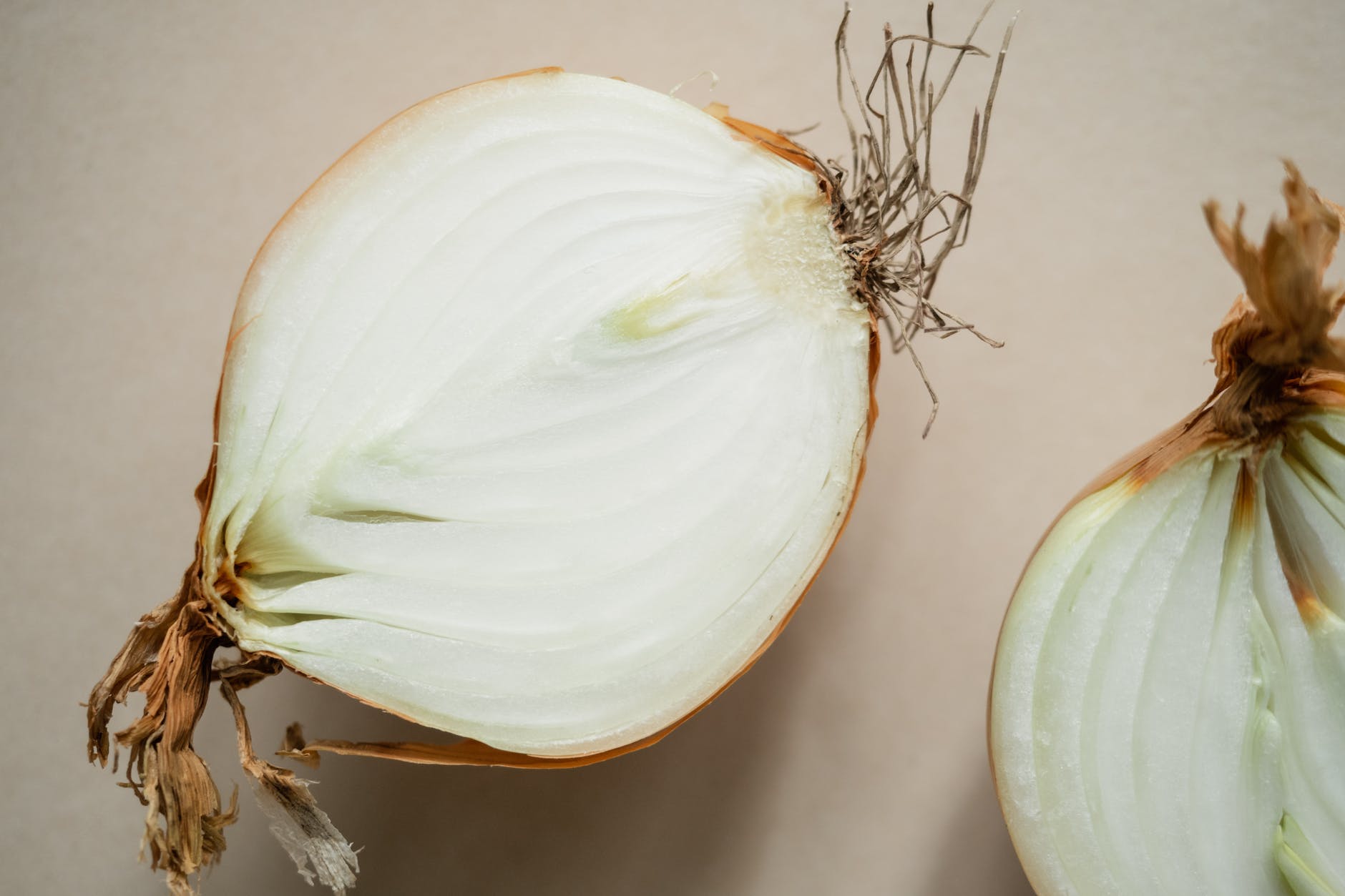
Say a recipe calls for “1 large white onion, diced.” What the heck does that mean, exactly? How big is a “large” white onion? What if I have large hands and every onion seems rather small to me as a result? What if I stumble into my local grocer to find that the only onions they have were dreamed up by the onion cartels in an attempt to secure world domination, and as a result resemble something closer to delicious pearlescent basketballs? All this size talk invites a lot of subjectivity. Rather sus if you ask me.
In the US, the USDA has set out some basic guidelines that folks who sell onions are supposed to follow. For example, “Large” onions must be at least 76 mm or 3 inches in diameter. However, the USDA doesn’t set a maximum diameter for “Large” onions, so there’s still a wide variation even there. “Department of Agriculture”? More like, “Department of Ambiguousness.”
Folks that think they’re clever try to fix this issue by saying something a little more specific, like “1 1/2 cups of diced white onion.” However, this doesn’t account for how densely the onion is packed when measured, nor how finely it’s diced, and doesn’t tell you how much onion you need to start with. What a bummer!
Now, say a recipe calls for “225 grams of diced white onion.” See, that’s helpful. Weight doesn’t vary based on how much something is packed down, or how finely it’s diced. Sure, you might dice your onion a bit too fine, or a bit too coarse, but if you’re weighing it out, you’ve at least used the right amount. And, you also know how much to buy to begin with (a little more than the recipe calls for, in order to account for waste). Any variation in how finely the onion is supposed to be diced is easily rectified through any provided pictures or references to millimeters etc. if it matters.
In short, buy a food scale if you don’t have one already. I list out all non-liquid ingredients by weight in my recipes, and having a food scale will help you modify and create your own easily repeatable recipes with nothing more than a few notes as you go.
Scale Recommendations
I’ve used a number of scales over the years. I started with a Taylor scale I picked up at a local big-box store, moved on to an OXO scale that worked well for a number of years, then moved on to the Escali Primo. I still own the Escali Primo three years later. It’s a well-designed scale that takes accurate and repeatable measurements. However, it doesn’t resolve to tenths of a gram (.1 gram)—which makes it poorly suited for weighing spices at the home-kitchen level. If you choose to pick up the Escali Primo—or a scale like it—I’d recommend getting a second precision scale for spices. I try to provide teaspoon/tablespoon measurements for spices etc. when I can, but spices vary wildly in terms of their volume—even with small amounts.
It’s because of this limitation that I tried out a “dual platform” scale from KitchenAid that promised the ability to weigh bulk ingredients and spices separately and accurately. This sadly turned out to be untrue. Apparently, dual-platform scales are difficult to design due to how weight sensors work, and they give very inconsistent weights for the same thing (especially on the bulk side) as a result. I recommend avoiding dual-platform scales for this reason. So, I’ve now switched over to using the Etekcity EK5250 Food Scale—which boasts an accuracy of .1 g when weighing things with a total weight under 1 kg, and 1 g when weighing things with a total weight over 1 kg. This dual-range accuracy means that as long as you measure out your spices first, or separately from your “bulk” ingredients (flour, etc.) it will do everything you need.
My Picks
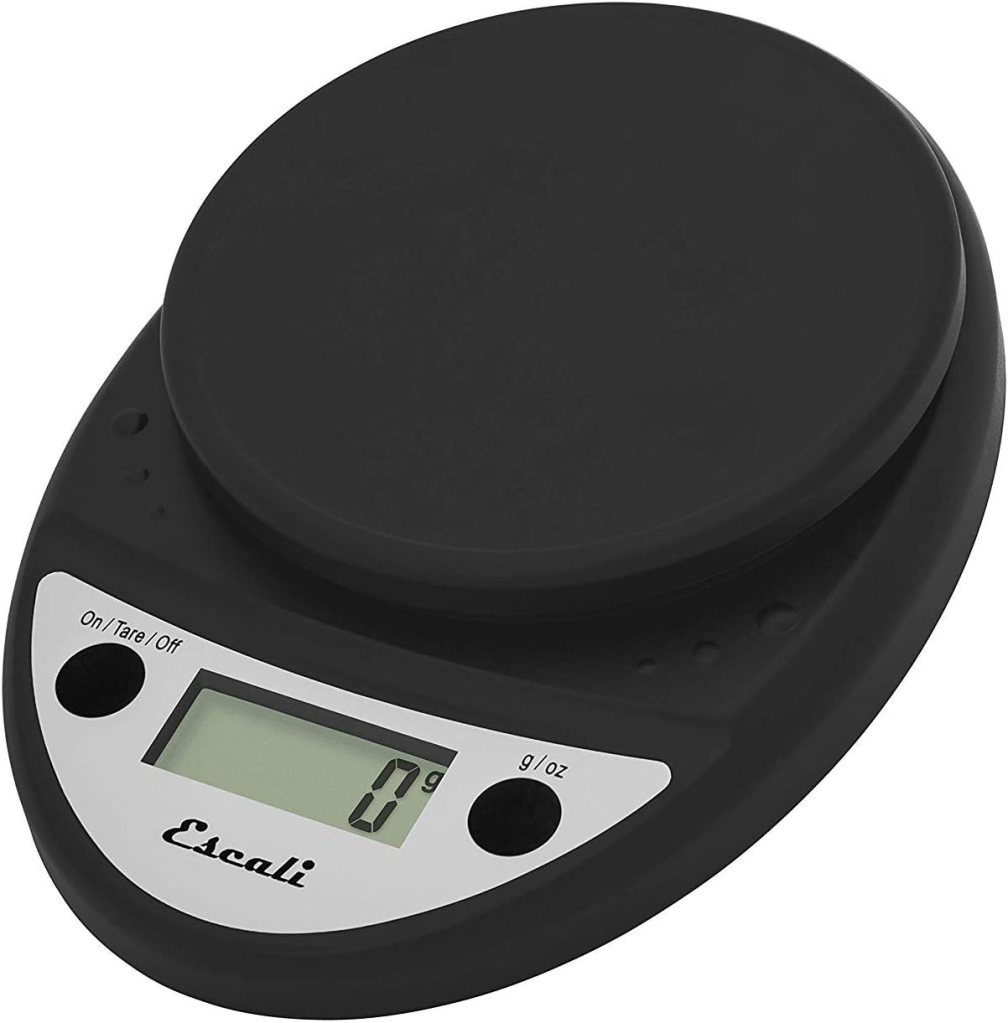
Escali Primo – $24.99
My former go-to. Durable, and works great for everything but measuring out spices.
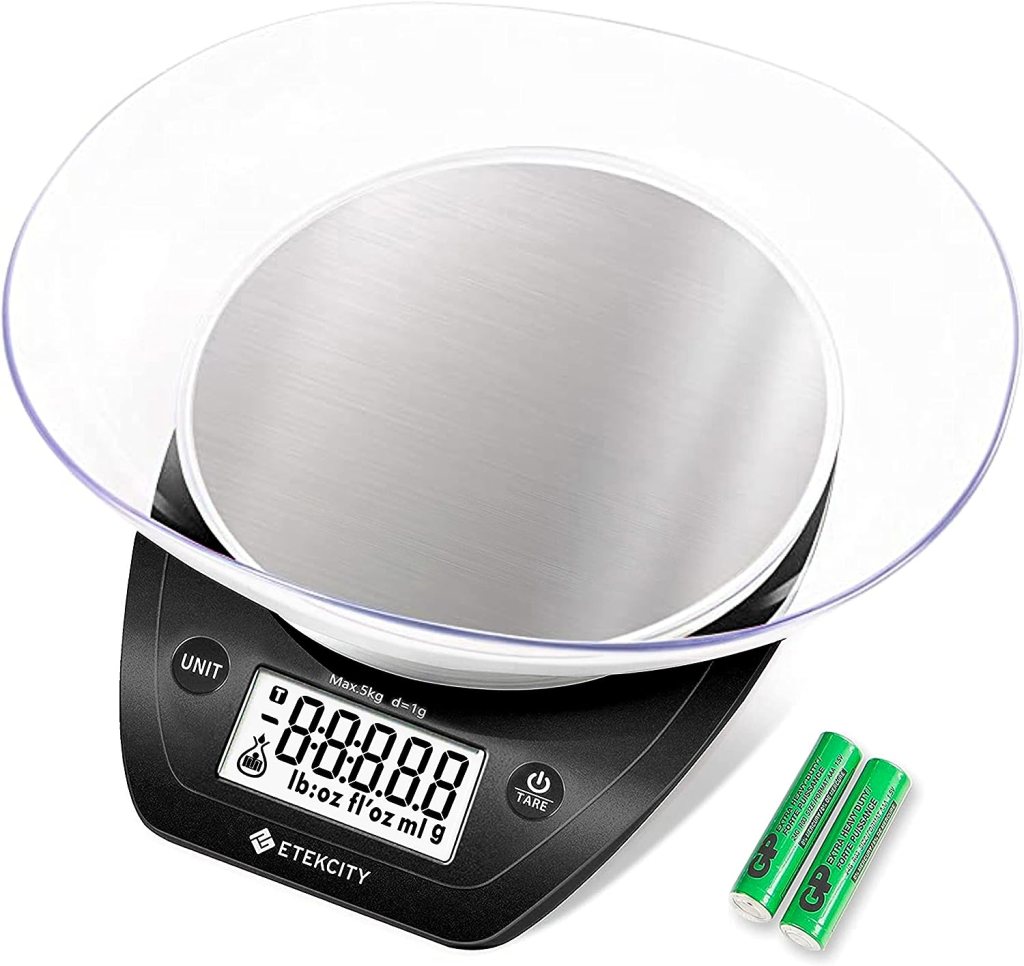
You might recognize Etekcity as one of the more successful Chinese companies to flood Amazon and other large e-commerce sites with affordable products. However, they’ve been around for a few years now, and the scale itself has good ratings, so I gave it a chance. I’ve only just started using it, so I’ll update this page based on its performance going forward. If you don’t want to risk it in the meantime, and are fine getting a second precision scale for spices—or not weighing your spices at all—pick up the Escali Primo.
 Emperial Foods